
Cybersecurity for Small Businesses: The Guide to Getting the Basics Right in 2026
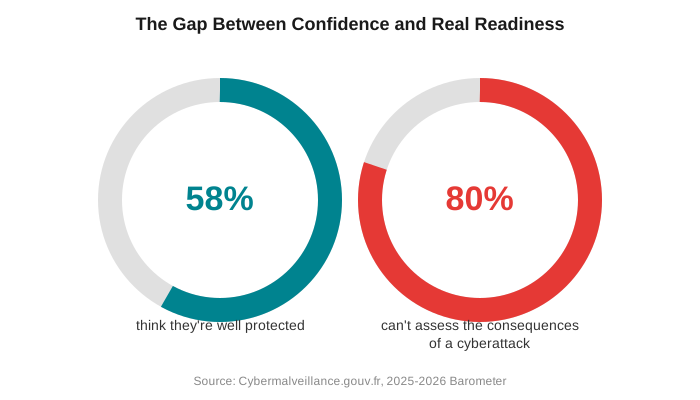
You probably think you’re reasonably well protected. Most small business owners think so too. The problem is that this sense of security rarely matches reality: according to the Cybermalveillance.gouv.fr national barometer, 58% of business leaders think they’re well protected, while 80% admit they don’t know how to assess the consequences of an attack on their business. This guide gives you the right reflexes to close that gap, without unnecessary technical jargon.
Why Small Businesses Are Now the Main Target
- 48% of ransomware victims in France are small and mid-sized businesses, up from 37% the year before (ANSSI, Cyberthreat Panorama 2025)
- 74% of French SMBs remain below the “Essential” cyber maturity level defined by ANSSI, France’s national cybersecurity agency
- 43% of French SMBs had already been victims of phishing in 2025, up from 24% in 2024, nearly doubling in a year
- The average cost of a cyberattack for a French SMB ranges from €59,000 to €466,000 depending on company size
Cyber risk is estimated to be 20 to 30 times higher than fire or theft risk for a business. Yet fewer than 5% of SMBs are insured against it, compared to near-universal fire coverage. It’s not a lack of awareness: 78% of companies invest less than €2,000 a year in IT protection, even though the average cost of an attack often exceeds €50,000.
Confidence vs. Real Readiness
The 5 Reflexes That Make the Biggest Difference
1. Secure Your Most Sensitive Accounts
Business email, banking access, management software: these are the most targeted entry points. A password manager and two-factor authentication drastically cut the risk.
2. Actually Test Your Backups
A backup you’ve never tried to restore is just a hypothesis. Test a restore on a representative sample of your data at least once a year.
3. Keep Software Updates Current
Most opportunistic attacks exploit known vulnerabilities that already have a patch nobody installed.
4. Secure Remote Work
Using an encrypted VPN for remote access has become an operational necessity, not an option.
5. Prepare a Reporting Procedure
Knowing who to contact in case of an incident (provider, insurer, cybermalveillance.gouv.fr) before the crisis hits saves precious hours.
An 8-person accounting firm receives an email that appears to come from its bank, asking to confirm an urgent transfer. Thanks to a simple internal rule (“any unplanned transfer is verified by a direct phone call, never by replying to the email”), the phishing attempt is foiled in two minutes. No expensive tool was needed, just a simple procedure the whole team knew about.
Frequently Asked Questions
Is a small business really a target for cybercriminals?
Yes, increasingly so: 48% of ransomware victims in France are small and mid-sized businesses. Most attacks are opportunistic and don’t target any specific company.
What budget should you plan for protection?
There’s no universal figure, but the most effective measures (passwords, tested backups, updates) cost mostly time, not money.
Should you get cyber insurance?
It’s strongly recommended given the gap between the real risk and current coverage rates (fewer than 5% of SMBs insured).
What should you do after a confirmed attack?
Contact cybermalveillance.gouv.fr and your IT provider immediately, isolate affected machines from the network, and never pay a ransom without expert advice.
